
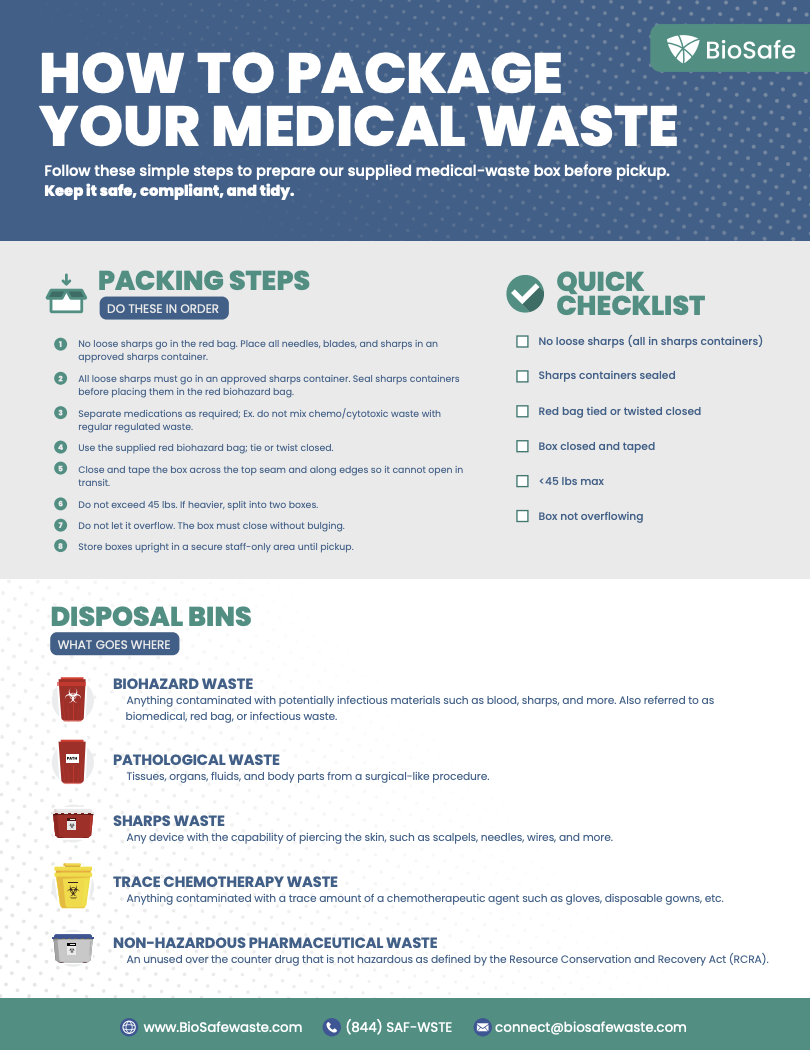
How to Pack Your Medical Waste Container And Sharps Container
For Biosafe customers to learn how to properly pack and seal their medical waste boxes prior to pickup. Includes a step-by-step instruction for packing and a guide to various containers so that your business/clinic stays compliant and safe.
Packing medical waste containers correctly is essential for safety, compliance, and cost control. When waste is segregated and packaged the right way, it reduces needlestick injuries and exposure to bloodborne pathogens for staff and transport workers. OSHA’s Bloodborne Pathogens Standard requires regulated waste and sharps to be placed in closable, leak-resistant, appropriately labeled or color-coded containers, and closed before removal to prevent spills or protrusions.
Correct packing also matters legally during transport. Under U.S. Department of Transportation hazardous materials rules, regulated medical waste must be shipped in rigid outer packaging, and sharps must be in puncture-resistant sharps containers that are securely closed per the manufacturer’s instructions. Improperly packed boxes can violate DOT requirements and lead to rejected pickups, fines, or incident reporting.
Finally, proper segregation protects the environment and keeps your facility aligned with Resource Conservation and Recovery Act (RCRA) hazardous-waste requirements for pharmaceuticals. RCRA rules require structurally sound, compatible containers for hazardous pharmaceutical waste and emphasize preventing leakage and mixing incompatible wastes; mixing streams can increase disposal obligations, costs, and liability.
For more information on the regulations regarding regulated medical waste, check out our free blog on medical waste compliance or check out the NC DEQ website for regulated medical waste.
What this BioSafe guide includes
- Step-by-step packing order for a supplied medical-waste box
- Clear “no loose sharps” rule and requirement to use sealed sharps containers
- Instructions to segregate chemo/cytotoxic waste from regular red-bag waste
- Use and closure of the red biohazard bag
- How to close and tape the box for safe transport
- Weight limit (≤45 lbs) and “don’t overfill” guidance
- Storage direction until pickup (upright, secure area)
- Quick packing checklist
- Disposal-bin “what goes where” section for biohazard, sharps, pathological, trace chemo, and non-haz pharmaceutical waste
If you have more questions regarding medical waste, check out our FAQ page, ourfree blog covering various topics regarding medical waste, or contact us using the form below.
Related articles

Learn what belongs in regulated medical waste for labs and clinical research organizations in North Carolina, including sharps, cultures, specimens, and PPE.
Read more →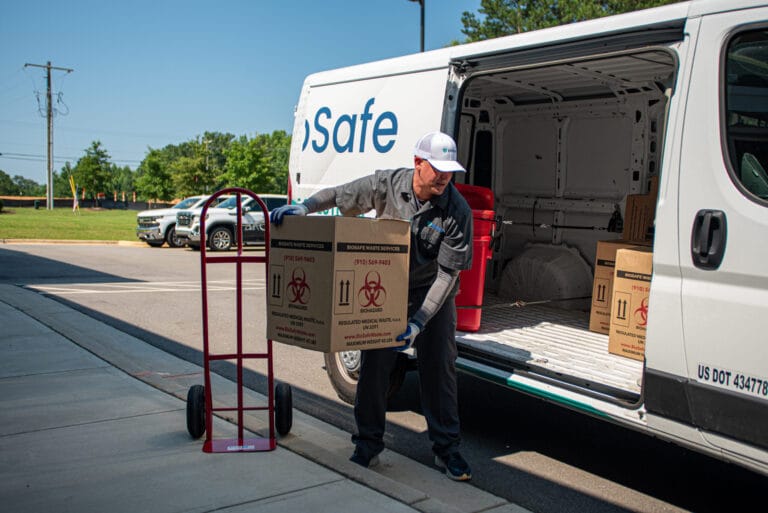
Reconstruction and restoration contractors often encounter sharps, blood-contaminated materials, and other regulated medical waste. Learn the difference between biohazardous waste and hazardous waste, proper packaging procedures, and how Biosafe helps North Carolina businesses stay compliant.
Read more →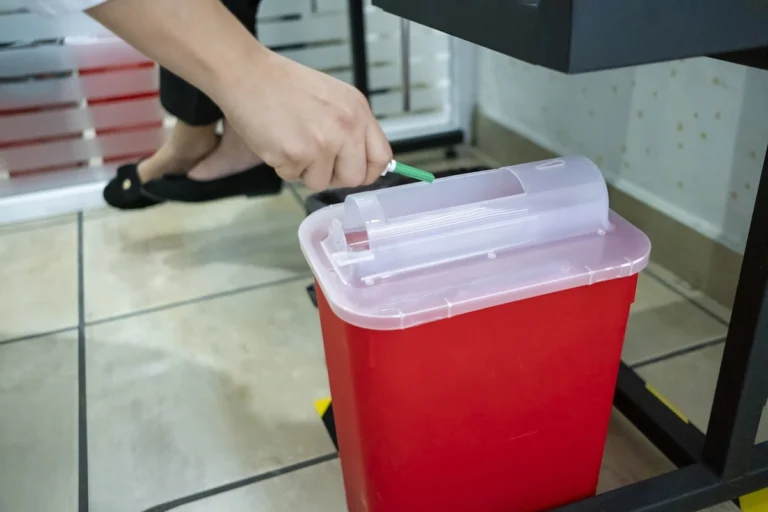
Getting Started with Medical Waste: 5 Steps to Stay Compliant
Read more →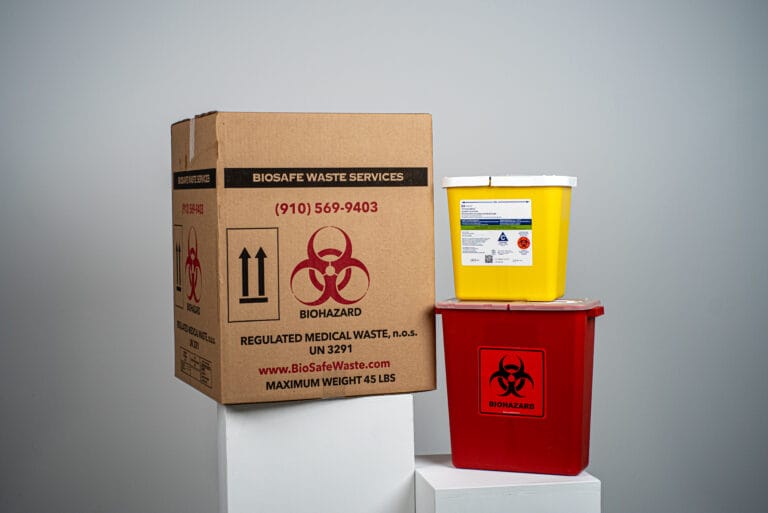
Here's how NC providers can jump start better medical waste handling this year. Saving money while staying fully compliant.
Read more →Let's talk about your practice
Straightforward pricing, no hidden fees, and a team that actually shows up. Tell us what you need.